Fossil science owes a debt to indigenous knowledge: Lesotho missionary’s notes tell the storyJulien Benoit, University of the Witwatersrand; Charles Helm, Nelson Mandela University, and Emese M Bordy, University of Cape Town
A giant star is changing before our eyes and astronomers are watching in real timeKeiichi Ohnaka, Universidad Andrés Bello (Chile) and Jacco van Loon, Keele University
Tanzania is losing fertile land to soil erosion: what’s happening and what can be doneMaarten Wynants, Ghent University; Griffith University
Life in fossil bones: what we can learn from tiny traces of ancient blood chemicalsTimothy G. Bromage, New York University
Ransomware: what it is and why it’s your problemThembekile Olivia Mayayise, University of the Witwatersrand
Early humans relied on simple stone tools for 300,000 years in a changing east African landscapeNiguss Gitaw Baraki, George Washington University; Dan V. Palcu Rolier; David R. Braun, George Washington University; Emmanuel K. Ndiema, National Museums of Kenya, and Rahab N. Kinyanjui
Mangrove loss is making the Niger Delta more vulnerable: we built a model that can track how the forests are doingChinomnso Onwubiko, University of Cape Coast
Arrow tips found in South Africa are the oldest evidence of poison use in huntingMarlize Lombard, University of Johannesburg
A Namib desert beetle runs to stay cool: how scientists solved the puzzle of this unique and speedy speciesDuncan Mitchell, University of the Witwatersrand and Joh R. Henschel, University of the Free State
Internet shutdowns are increasing dramatically in Africa – a new book explains whyTony Roberts, Institute of Development Studies
Fossil hunters find a new dinosaur track site on South Africa’s coast – the youngest so farCharles Helm, Nelson Mandela University and Willo Stear, Nelson Mandela University
Food waste in South Africa is dumped in landfills - study weighs up healthier and more sustainable optionsAnne Fitchett, University of the Witwatersrand
Becoming human in southern Africa: what ancient hunter-gatherer genomes revealMarlize Lombard, University of Johannesburg
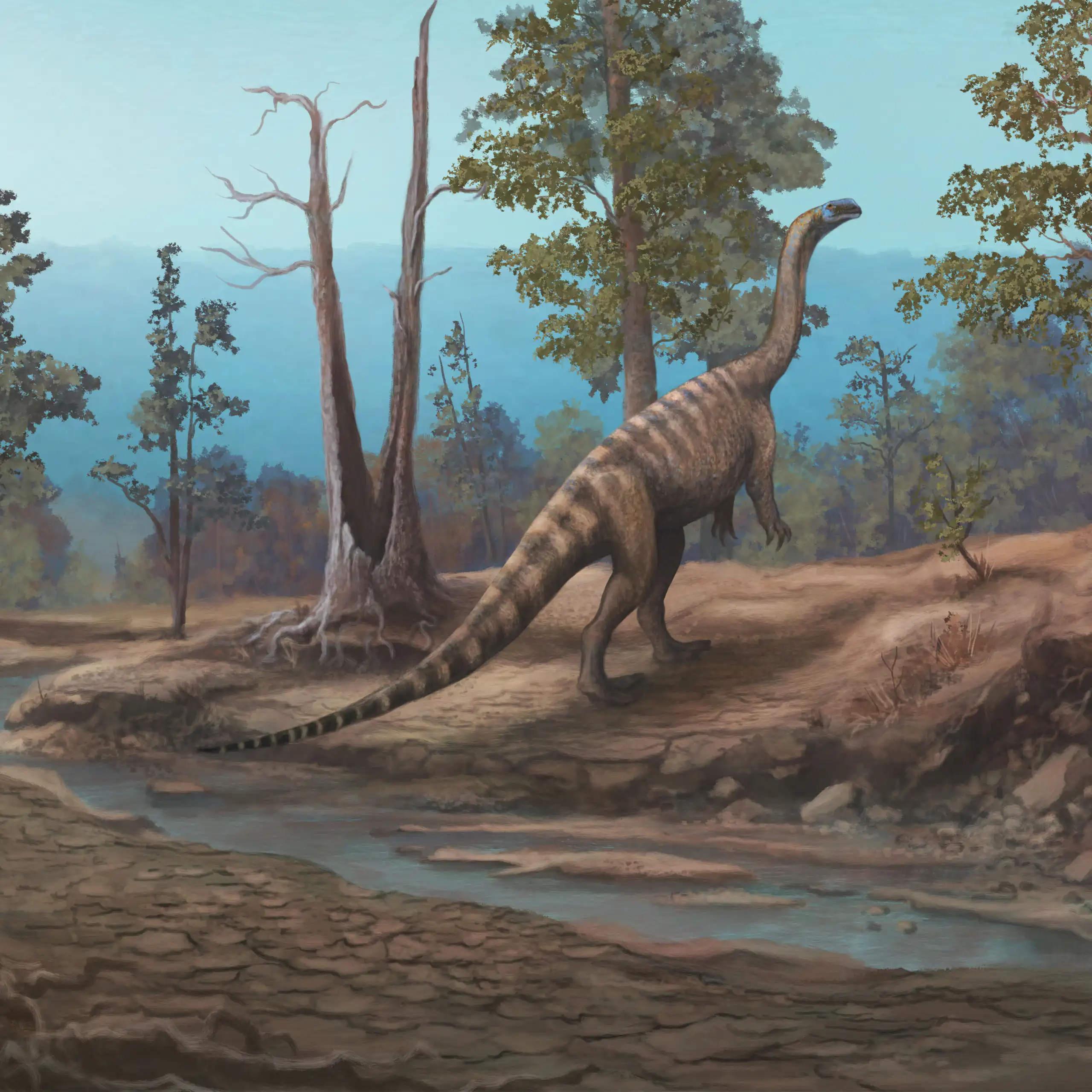
Fossil science owes a debt to indigenous knowledge: Lesotho missionary’s notes tell the storyJulien Benoit, University of the Witwatersrand; Charles Helm, Nelson Mandela University, and Emese M Bordy, University of Cape Town
Fossil hunters find tracks of animals from about 3 million years ago – a first in South AfricaCharles Helm, Nelson Mandela University
Machines whisper before they scream: we built an AI model that predicts expensive problemsEdward Khomotso Nkadimeng, University of the Witwatersrand
Engineered microbes could tackle climate change – if we ensure it’s done safelyDaniele Fulvi, Western Sydney University
South Africa’s flagship telescope at 20: an eye on the sky and on the communityVanessa McBride, International Science Council; University of Cape Town
Access to water has a long racial history in Durban: I followed the story in the city’s archivesKristin Brig, Washington University in St. Louis
AI in the courtroom: the dangers of using ChatGTP in legal practice in South AfricaJacques Matthee, University of the Free State and Grey Stopforth, University of the Free State
The great wildebeest migration, seen from space: satellites and AI are helping count Africa’s wildlifeIsla C. Duporge, Princeton University; Daniel Rubenstein, Princeton University; David Macdonald, University of Oxford, and Tiejun Wang, University of Twente
Ancient antelope teeth offer surprise insights into how early humans livedMegan Malherbe, University of Zurich
AI reveals which predators chewed ancient humans’ bones – challenging ideas on which Homo species was the first tool-using hunterManuel Domínguez-Rodrigo, Rice University
Where did the first people come from? The case for a coastal migration from southern AfricaAlan Whitfield, National Research Foundation; Charles Helm, Nelson Mandela University; Francis Thackeray, University of the Witwatersrand; Renee Rust, Nelson Mandela University, and Willo Stear, Nelson Mandela University
We decoded the oldest genetic data from an Egyptian, a man buried around 4,500 years ago – what it told usAdeline Morez Jacobs, University of Padua
Supernova theory links an exploding star to global cooling and human evolutionFrancis Thackeray, University of the Witwatersrand
Chimpanzees ingest more than the equivalent of one alcoholic drink a day – new researchStefano Kaburu, Nottingham Trent University
Whose turn is it? The question is at the heart of language and chimpanzees ask it tooKayla Kolff, Osnabrück University and Simone Pika, Osnabrück University
We studied more than 500 giraffe skulls from all over Africa – and confirmed there are 4 distinct speciesNikolaos Kargopoulos, University of Cape Town and Julian Fennessy, University College Dublin
War, politics and religion shape wildlife evolution in citiesElizabeth Carlen, Washington University in St. Louis
Humans and animals can both think logically − but testing what kind of logic they’re using is trickyOlga Lazareva, Drake University
Genetic tests for cancer can give uncertain results: new science is making the picture clearer to guide treatmentClaudia Christowitz, Stellenbosch University
Smart cities start with people, not technology: lessons from Westbury, JohannesburgRennie Naidoo, University of the Witwatersrand
3D printed food: yuck or yes? Researchers ask South African consumersOluwafemi Adebo, University of Johannesburg and Nicole Cunningham, University of Johannesburg
Ageing bridges around the world are at risk of collapse. But there’s a simple way to safeguard themAndy Nguyen, University of Southern Queensland