

The ageing population is only a relatively small contributor to the growth in hospital admissions.
Articles on Health reform
Displaying 41 - 60 of 105 articles

Health policy was an important factor in the election outcome, but one of the most important issues in the health sector – the impact of out-of-pocket costs – was mostly ignored.

Health is always a key factor in deciding which way to vote. So what have the major parties promised in health? And what could these changes mean for consumers?

The greater threats to our national public health system lie in the increasing role of consumer co-payments and the power of vested interests that stifle policy innovation in health.

We need to focus on keeping people out of hospital by providing better co-ordinated and integrated care.
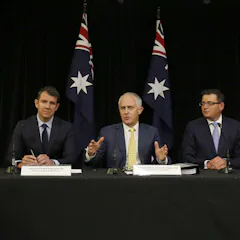
The Commonwealth wants to partially reverse the cuts it made to public hospital funding in the 2014 budget. But the deal has some unwelcome strings attached.

Around a quarter of people with private health insurance still choose to use the public system. Why?

For many patients, hospital may not be the best place for their care.

Health-care costs are rising, driven by expensive developments in treatments, more demanding populations and rising national wealth. We need to change the financing system to meet this challenge.

Waiting for emergency care, specialist appointments and “elective” procedures is not only inconvenient and frustrating, it can also be painful and detrimental to your health and well-being.

Why is it so difficult to find out exactly how much it’s going to cost to have that suspicious mole removed or to be admitted to hospital for that colonoscopy or hip replacement?

In a time of growing populations, hospitals must guarantee access, ensure quality, minimise the chances of anything going wrong, and do it all within the available budget. So they need to change.

The 5.6% increase amounts to the average family paying about $300 more a year for an average policy.

We start 2016 with big challenges for the health system and uncertainty as to how governments will meet them.

The Coalition tried to justify its failed GP co-payment as an attempt to rein in consumers, who were driving the increase in Medicare costs. Turns out government policy was mostly to blame.

The reforms announced today have the potential to change this appalling situation. But ultimately they should be judged on the outcomes they achieve for patients.

All insurers would have to provide a comprehensive set of health services to its customer, covering all aspects of their health care.

The private health insurance is complicated and difficult to navigate. Here’s what we need to do to better protect consumers.

To avoid ineffective treatments, we need a new way to identify and reduce questionable care. A new Grattan Institute report shows how to do it.

State and territory leaders will meet in Sydney today to nut out solutions to health and education funding gaps. But what exactly is the problem they’re hoping to address?
Top contributors
-

Honorary Enterprise Professor, School of Population and Global Health, and Department of General Practice and Primary Care, The University of Melbourne
-
Program Director, Health and Aged Care, Grattan Institute
-
Reader in Health Economics, Centre for Health Economics, University of York
-
Professor of Health Economics and Director, Centre for Health Economics, Monash Business School, Monash University
-
Professor of Health Economics and Director, Centre for Health Economics Research and Evaluation, University of Technology Sydney
-
Lecturer, Public Sector Finance, University of Canberra
-
Jim Gillespie is a Friend of The Conversation.
Associate Professor in Health Policy, Leeder Centre for Health Policy, Economics and Data & Sydney School of Public Health, University of Sydney
-
Adjunct Associate Professor, Menzies Centre for Health Policy and Economics, University of Sydney
-
Professor of Health Economics, University of Technology Sydney
-
Health economist, University of Sydney
-
Professor and Director, Macquarie University Centre for the Health Economy, Macquarie University
-
Emeritus Professor, Menzies Centre for Health Policy, University of Sydney
-
Associate Professor, Brain and Mind Centre, University of Sydney; University of Canberra
-
Professor of Health Economics, University of Bologna, University of Newcastle
-
Professor, Public Service Research, UNSW