

The rate of very high psychological distress is rising most steeply in the middle aged, especially in middle-aged women on low incomes. New funding should match this need.
Articles on Health economics
Displaying 101 - 120 of 307 articles

Primary care and COVID will be the top two challenges for new government. But the likely ministers have strong credentials.

Labor’s election pledge for Medicare includes some additional funding, but to strengthen the system, it needs to improve people’s access to doctors.

While states are responsible for running hospitals, the federal government shares responsibility for paying for them. But it’s an uneasy relationship.

Medicare has been mentioned a lot this election campaign. But what have the major parties actually promised? Five experts grade their policies.

Health-care costs are continuing to rise faster than wages, so many Australian families are finding it increasingly difficult to keep up.

When states reduce barriers for low-income children to get coverage, their mothers are more likely to be married and less likely to smoke.

Changes in the latest federal budget will mostly affect people who need multiple medicines throughout the year, perhaps for chronic disease. But there are other ways to reduce drug costs.

Overall, health fared poorly in this year’s budget.

Even minor reductions in COVID transmission rates due to early isolation would justify the additional costs associated with the policy.

Free rapid antigen tests makes public health sense and economic sense.

More cases of long COVID can put strain on our health system. So we need to think about where and how we offer care.

Health economists have tools for weighing up the benefits and costs of medical interventions. And they aren’t perfect.

Singapore will start charging people who choose not to be vaccinated for any COVID-related hospital care. While Australia’s hospitals are also under pressure, we shouldn’t follow suit.

It’s human nature to unconsciously rely on quick rules to help make spur-of-the-moment decisions. New research finds physicians use these shortcuts, too, which can be bad news for some patients.

Compared to ten similar countries, Australia does well on equity and health care outcomes. But it still has a way to go on access and how well the health system fits together.
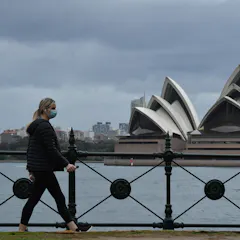
NSW needs to mandate masks outdoors, provide adequate financial support, set up a ‘ring of steel’, use rapid tests for essential workers, and ensure cases not in full isolation get to zero, among others.

Pitting health against the economy is a false dichotomy.

With more than 850 changes to Medicare on the cards, the system needs time to adjust. Hasty implementation may mean patients face higher gap fees.

A sustainable private health insurance system requires enough young, healthy people paying premiums and not making claims. But government policies haven’t achieved this. Here’s what to try instead.
Top contributors
-

Honorary Enterprise Professor, School of Population and Global Health, and Department of General Practice and Primary Care, The University of Melbourne
-
Program Director, Health and Aged Care, Grattan Institute
-
Professor of Health Economics, The University of Melbourne
-
Professor of Health Economics and Director, Centre for Health Economics, Monash Business School, Monash University
-
Professor and Director, Macquarie University Centre for the Health Economy, Macquarie University
-
Professor of Health Economics, Flinders University
-
Reader in Health Economics, Centre for Health Economics, University of York
-
Adjunct Associate Professor, Menzies Centre for Health Policy and Economics, University of Sydney
-
Professor, Public Service Research, UNSW
-
Professor of Health Economics and Director, Centre for Health Economics Research and Evaluation, University of Technology Sydney
-
Health economist, University of Sydney
-
Associate Professor, School of Economics and Marketing, University of Technology Sydney
-
Senior Research Fellow, Melbourne Institute of Applied Economic and Social Research, The University of Melbourne
-
Jim Gillespie is a Friend of The Conversation.
Associate Professor in Health Policy, Leeder Centre for Health Policy, Economics and Data & Sydney School of Public Health, University of Sydney
-
Senior Policy Adviser, National Rural Health Alliance; Adjunct Lecturer, University of Sydney