

A university placement encourages future doctors to listen to older people’s stories and develop a deeper understanding of the person behind the patient.
Articles on Healthcare
Displaying 1 - 20 of 322 articles
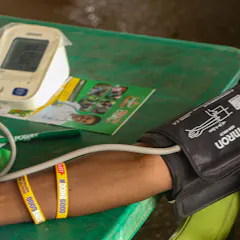
Millions of Nigerians are living with hypertension without knowing it – and the gaps in diagnosis and care run deep.

Healthcare students need more than knowledge. Learning through play can give them a safe place to make decisions, get things wrong and try again.

South Korea’s unusually rapid transition to a super-aged society means it has had little time to find solutions for pension funding and healthcare for the elderly.

Both countries offer universal healthcare, but Danes live nearly two years longer than Britons. Here’s why.

Caregivers said their priorities were pension increases, a dedicated allowance, food security and basic infrastructure.

People living with Alzheimer’s as well as their caregivers benefit from culturally informed care.

Hospitals are tasked with making patients better, but when the hospital that provides care also owns the insurance company that pays for that care, the incentives get more complicated.

Andy Burnham says his government is going to fix it for good. What would that take?

Kidney disease is often associated with dialysis or transplants, but it also affects memory and concentration, and increases stroke risk.

A standardized framework for regulating the safety and efficacy of AI in healthcare has yet to be established.

Six years after Italy became Europe’s COVID-19 ground-zero, successful action led by a victims’ association against health governance failings sets an encouraging precedent.

Based on our modelling we recommend that governments in Egypt and across Africa increase taxes on sugary drinks.

Thailand has built a connected healthcare system to track people’s health even in rural villages.
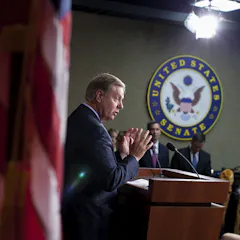
Sen. Graham repeatedly moved in the direction South Carolina and Republican politics were headed rather than where they had been.

‘Fix-it’ medical approaches often go against people’s wishes near the end of life, creating unnecessary and preventable suffering.

Different social realities lead to different forms of vaccine hesitancy.

Many nurses experience sexual comments, touching and intimidation at work. Too often, they are expected to cope quietly.

Uncertainty is common in medicine, and AI isn’t very good at navigating it.

Some new spending initiatives in health should add value, but the budget lacks a long-term vision for building cross-party consensus on improving healthcare.
Top contributors
-

Research Scientist of Health Policy and Economics, University of Southern California
-
Director, PUSKAPA
-
Professor of Health Services Research, University of Aberdeen
-
Associate professor, University of the Western Cape
-
Professor of Finance and Economics, UNSW
-
Senior Researcher, Associate Professor: Economic Management Sciences, University of Pretoria
-
Professor of Health Policy, University of York
-
Professor of Cybersecurity, Head of School of Computer Science and Informatics, De Montfort University
-
Health economist, University of Sydney
-
Professor of Leadership and Management, Edge Hill University
-
Reader in Health Economics, Centre for Health Economics, University of York
-
Executive Dean, Bond Business School, Bond University
-
Professor, UNSW
-
Head of Research, PUSKAPA
-
Senior Lecturer in Health Care Law and Ethics, Barrister, Solicitor, Swansea University