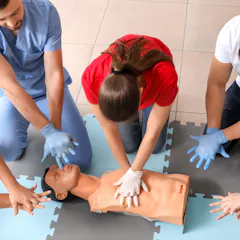
Heart-related diseases are the leading cause of death for women worldwide. But bystanders are less likely to intervene to perform CPR on a woman than a man.
Our ability to adapt to changing circumstances plays an important part in our health decisions. New research suggests health education campaigns need to take this into account.
Aunty Gracelyn Smallwood’s work in helping to shape a world-leading approach to HIV and AIDS was recognised by Nelson Mandela – and she toured the world with it.
Education needs to address the big gaps in the knowledge around the menstrual cycles and the impact menstruation has on a wide range of health outcomes.
The growing interest in wellness is an opportunity for universities to provide evidence-based information beyond campuses, in the broader community.
(Shutterstock)
Mental health isn’t just about illness, it is also about wellness. Universities are well positioned to offer accessible, evidence-based wellness education to the general public.
Students and a teacher seen on a rooftop garden at École Secondaire Lacombe Composite High School in Lacombe, Alta., in June 2022.
THE CANADIAN PRESS/Jason Franson
Both at home and in schools, food can become a powerful tool to empower young people to take climate action, which can lead to reduced climate anxiety and increased feelings of hope for the future.
Moms and dads of queer and trans teens also have parental rights.
THE CANADIAN PRESS/Peter McCabe
Conservative rhetoric about ‘parent rights’ that marginalizes LGBTQ+ positive sex education erases the complexity of parent identities and denies possibilities for richer school experiences.
Around two in every 100 people have sex characteristics between the male-female binary definitions. Training for doctors and other health workers needs to reflect this.
Health and physical education includes subjects such as sport science, health studies, athlete development, food and nutrition, outdoor and environmental studies, and sport and recreation.
Health education curriculums need to specifically prepare healthcare professionals to respond to a pandemic when it comes to aspects like infection control, aged care and mental health.
A nationwide online survey collected information from 4,202 teenagers and young women in Australia, about how their periods affected their education – either at school, university or VET.
Health is a complex issue that requires an interdisciplinary approach to study and teach.
(Shutterstock)
The pandemic has revealed the complexity of new and ongoing health crises. Post-secondary institutions need to respond to this complexity with an interdisciplinary approach to teaching health issues.
The Master of Science in Global Health Delivery Class of 2018.
Photo by Jean Christophe Kitoko for UGHE
In the past, when infections were the dominant form of disease and death, and humans didn’t understand how they spread, an epidemic ended when enough people had died that there were no more potential victims…