

We have lots of data about hospital safety, but it’s not used to make us safer or more comfortable when we’re admitted.
Articles on Health policy
Displaying 321 - 340 of 548 articles

One would think governments would do all they could to ensure palliative care is available to all who need it. This is not the case in Australia today.

Private companies are building new inpatient units – the state has been trying to reduce them for the last five years.

Australia has more doctors per population than most comparable countries, yet many living in rural and remote areas don’t receive the care they need. Changing the way we train doctors will fix this.

Leaked documents of a secret ‘taskforce’ to reform public hospital funding reveal some controversial proposals. So how are hospitals funded and why might this need changing?

No wonder obesity is a tough public health issue for governments to deal with. Our research has uncovered a range of barriers to tackling it, some more obvious than others.

The latest federal budget leaves mental health chronically underfunded, with inequitable access to services, and without a clear national strategy.

The 30% subsidy for private health insurance was predicted to be a bad and costly policy many years ago. And 20 years later, the only thing that’s changed is the $6 billion-plus hole in the budget.

The NDIS roll-out has been criticised for many glitches, but that doesn’t mean the scheme is failing.

Citizens do not have enough say in how mental health services are planned, funded and run in Australia. Here’s why that needs to change.
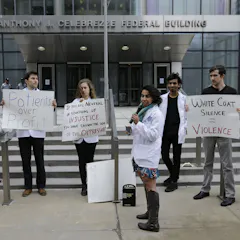
Republicans have tried dozens of times to repeal Obamacare, but their biggest challenge has been the lack of a workable replacement plan. Here’s an idea devised by two health economists.

The health impacts of urban and regional planning are undisputed. So why did the NSW government adopt and then discard health objectives as part of state planning legislation?

The roll-out of a new screening program for cervical cancer has been delayed, leaving Australian women understandably confused about if or when they need Pap smears. Here’s what they need to know.

Older Australians needing extra help at home with bathing or gardening can now choose who provides that service. So what do you need to know before choosing a new service for yourself or a family member?
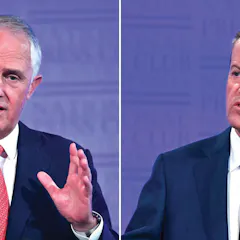
In twin speeches to the National Press Club, Labor leader Bill Shorten said bulk-billing rates are falling, while Prime Minister Malcolm Turnbull said bulk-billing is at record levels. Who was right?

It’s not all about health and wealth.

An “endgame” approach focuses on ending the tobacco pandemic, and foresees a tobacco-free future.

The federal government is tackling antimicrobial resistance with a ‘One Health’ approach. But what is One Health and what can it offer that other approaches haven’t?

Classing e-cigarettes as quit smoking aids could help rebrand the tobacco industry as a legitimate player in health policy. Here’s why we should be concerned.

Using intellectual property laws to try to shut down Mark Rogers’ ‘Save Medicare’ website shows how these laws serve to restrict free speech and advance government privatisation agendas.
Top contributors
-

Honorary Enterprise Professor, School of Population and Global Health, and Department of General Practice and Primary Care, The University of Melbourne
-
Program Director, Health and Aged Care, Grattan Institute
-
Professor of Health Economics, The University of Melbourne
-
Professor of Health Economics and Director, Centre for Health Economics, Monash Business School, Monash University
-
Professor, Public Service Research, UNSW
-
Jim Gillespie is a Friend of The Conversation.
Associate Professor in Health Policy, Leeder Centre for Health Policy, Economics and Data & Sydney School of Public Health, University of Sydney
-
Reader in Health Economics, Centre for Health Economics, University of York
-
Professor and Director, Macquarie University Centre for the Health Economy, Macquarie University
-
Adjunct Associate Professor, Menzies Centre for Health Policy and Economics, University of Sydney
-
Associate Professor, Brain and Mind Centre, University of Sydney; University of Canberra
-
Lecturer, Public Sector Finance, University of Canberra
-
Professor of Health Economics, University of Technology Sydney
-
Emeritus Professor, Menzies Centre for Health Policy, University of Sydney
-
Emeritus Professor of Public Health, La Trobe University
-
Associate Professor, Centre for Health Economics, Monash University