

Recruiting internationally educated health workers is a key part of Canada’s proposed solution to the health worker crisis. But there are ethical questions about recruiting from foreign countries.
Articles on Health workforce
Displaying 21 - 40 of 102 articles

A new Grattan report recommends making general practice a team sport, using the skills of other clinicians and health-care workers.

Three out of five said yes.

Burnout and ‘compassion fatigue’ can compromise patient safety and signal health worker exhaustion. And they are a ticking time bomb for health care.

The greatest workforce challenge Australia faces is in health, an issue that will likely be with us for another decade. Here’s one way to fix it.

Australia needs an additional 35,000 aged care workers a year. While skilled migration can play a role, it’s unlikely to be enough to fix the immediate or long-term workforce shortages.

Hospitals are struggling, with ambulances ramping outside emergency departments and patients facing long waits for care. But doing more of the same won’t fix the problem.

While demand for subsidised services is high and rising, many parts of the system need improvement. The federal budget can’t solve these problems by placing the entire burden on taxpayers.
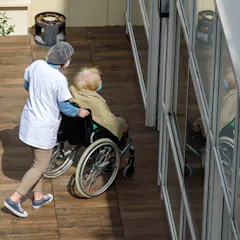
Only a fraction of aged care homes currently have staffing levels above the new minimum ratios that will be mandatory from next year.

Devalued and paid significantly less than nurses, it’s no wonder Australia’s aged care workforce have had enough.

Around 70% of front-line health workers said they were exhausted in 2020. With COVID hospitalisations expected to rise in coming weeks, the pressure is about to get a whole lot worse.

India, Nigeria, Pakistan and South Africa lose thousands of trained doctors each year, lured away to work in richer countries – at great cost to their nation’s healthcare systems.

Health education curriculums need to specifically prepare healthcare professionals to respond to a pandemic when it comes to aspects like infection control, aged care and mental health.

Adequate numbers of healthy and motivated health professionals are also critical to governments’ effective responses to public health emergencies such as COVID-19.

Midlevel health workers can provide diagnostic and therapeutic services with lower entry qualification requirements and shorter training periods than doctors.

Aged care facilities are employing fewer registered and enrolled nurses and more carers, which saves money but results in sub-standard care.
The biggest system failure in aged care is staffing. We don’t need to wait until the royal commission is over to fix it – this can be done now.

Nurses and midwives are among society’s most highly valued professionals. But a disturbing national picture is emerging of escalating levels of over-work and burnout.
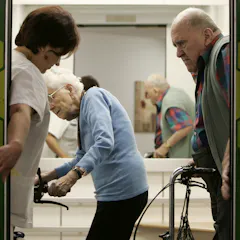
Nursing home providers looking to cut costs are bypassing registered nurses and employing less-skilled personal care attendants (PCAs) who aren’t trained for the job.

Highly engaged doctors do much better on a wide range of important measures, from clinical performance, financial management and safety indicators to patient experience and overall quality standards.
Top contributors
-

Honorary Enterprise Professor, School of Population and Global Health, and Department of General Practice and Primary Care, The University of Melbourne
-
Professor, Centre for Health Policy, Melbourne School of Population and Global Health, The University of Melbourne
-
Reader in Health Economics, Centre for Health Economics, University of York
-
Program Director, Health and Aged Care, Grattan Institute
-
Professor of Health Economics and Director, Centre for Health Economics, Monash Business School, Monash University
-
Founder of the Australian Health Care Reform Alliance & Emeritus Professor, UNSW
-
Director and Taylor Family Chair, Centre for the Business & Economics of Health, The University of Queensland
-
Emeritus Professor of Public Health, La Trobe University
-
Associate Professor of Accounting, University of Technology Sydney
-
Professor and Director, Macquarie University Centre for the Health Economy, Macquarie University
-
Professor, Australian Institute of Health Innovation, Macquarie University
-
Professor; Associate Dean - Learning & Teaching, University of Wollongong
-
Professor of Health Equity, Stretton Health Equity, School of Public Health, Adelaide University
-
Senior Lecturer law, ethics and sociology, Charles Sturt University
-
Principal Researcher, Research Matters; Research Officer, Monash University