Creating a safe space for patients to ask questions and provide fully informed consent could help increase clinical trial recruitment.
FatCamera/E+ via Getty Images
Overcoming the access barriers and biases that underrepresented and underserved communities face could not only improve research participation but also improve care.
People inquire about receiving a monkeypox vaccine at an outdoor walk-in clinic in Montréal on July 23, 2022. The World Health Organization has declared the virus a global health emergency.
THE CANADIAN PRESS/Graham Hughes
When states reduce barriers for low-income children to get coverage, their mothers are more likely to be married and less likely to smoke.
Not engaging Black communities meaningfully in health and other policy-making processes has been a critical failure, reflecting a history of systemic racism, marginalization and political indifference.
(Nappy.co)
While policy organizations publicly claim that they want input from racialized and other marginalized communities, many fail to listen to, accept or integrate what those communities have to say.
Responding to the mental health needs of people who are unjustly disadvantaged by the pandemic in Canada will require accurate data.
(Shutterstock)
The mental health impact of the pandemic has not affected everyone equally. An equitable approach to mental health promotion, prevention and treatment can help ensure equitable access to services.
For patients, often children, with rare diseases, getting a diagnosis is difficult and time-consuming.
monkeybusinessimages/iStock via Getty Images
Record-breaking technology can sequence an entire human genome in a matter of hours. The work could be a lifeline for people suffering from the more than 5,000 known rare genetic diseases.
COVID-19 vaccines and treatments aren’t societal silver bullets when health disparities persist.
Michael Nagle/Xinhua via Getty Images
Vaccines and medical treatments can only go so far in an unequal society. Facing the ongoing history of racial discrimination and bias in the US would help end the pandemic.
Medical innovations paired with innovative programs to get them to Black, Indigenous and Hispanic Americans can help close the health inequality gap.
Green spaces are inequitably distributed across cities: The quality and quantity are lower in racialized neighbourhoods.
THE CANADIAN PRESS/Cole Burston
Green spaces can be part of the plan to ‘build back better’ after COVID-19. But city officials and policy-makers must address systemic racism for urban green spaces to benefit public health.
Prevention is key to managing the parallel mental health pandemic that has occurred in tandem with COVID-19.
(Pexels/Ketut Subiyanto)
The mental health crisis occurring in tandem with COVID-19 has stressed resources and stretched service waitlists into years. There is an urgent need for prevention strategies, not just treatment.
Gathering on the land: Indigenous ways of knowing can ensure that communities reclaim and promote health and healing.
(Melody Morton-Ninomiya)
Many researchers may lack resources to guide them in conducting research that is equitable, inclusive and respectful of diverse Indigenous knowledge, ethics, practice and research sovereignty.
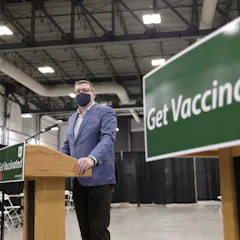
Premier Scott Moe speaks after a media tour of the COVID-19 mass immunization clinic and drive-thru immunization space in Regina on Feb. 18, 2021. The province also has mobile immunization vehicles to distribute the vaccine to remote communities.
THE CANADIAN PRESS/Michael Bell
Fair global agreements, home-grown vaccines and sharing extra doses with poorer nations are all needed if we’re to ever emerge from this pandemic.
Minister of Justice David Lametti gives a thumbs up as he rises to vote in favour of a motion on Bill C-7, medical assistance in dying, in the House of Commons on Dec. 10, 2020.
THE CANADIAN PRESS/Justin Tang
Expanding access to medical assistance in dying (MAID) to those not terminally ill puts vulnerable people at risk of feeling pressured into MAID, and doctors at risk of being forced to facilitate it.
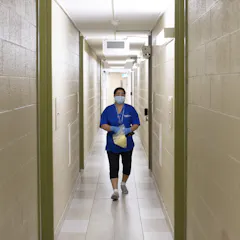
A personal support worker with West Neighbourhood House’s Parkdale Assisted Living Program on her way to see a resident at Toronto’s May Robinson apartments seniors’ housing on April 17 2020.
THE CANADIAN PRESS/Chris Young
So far, the only COVID-19 vaccines authorized for use need to be kept frozen. But there are many places in the world that can’t support a cold supply chain.
Professor of Surgery and Director of the Virtual Health Hub and the Remote Presence Robotic Program at the University of Saskatchewan, University of Saskatchewan